How many public sector tenders are there in the UK? A year of Find a Tender in charts
· 7 min read
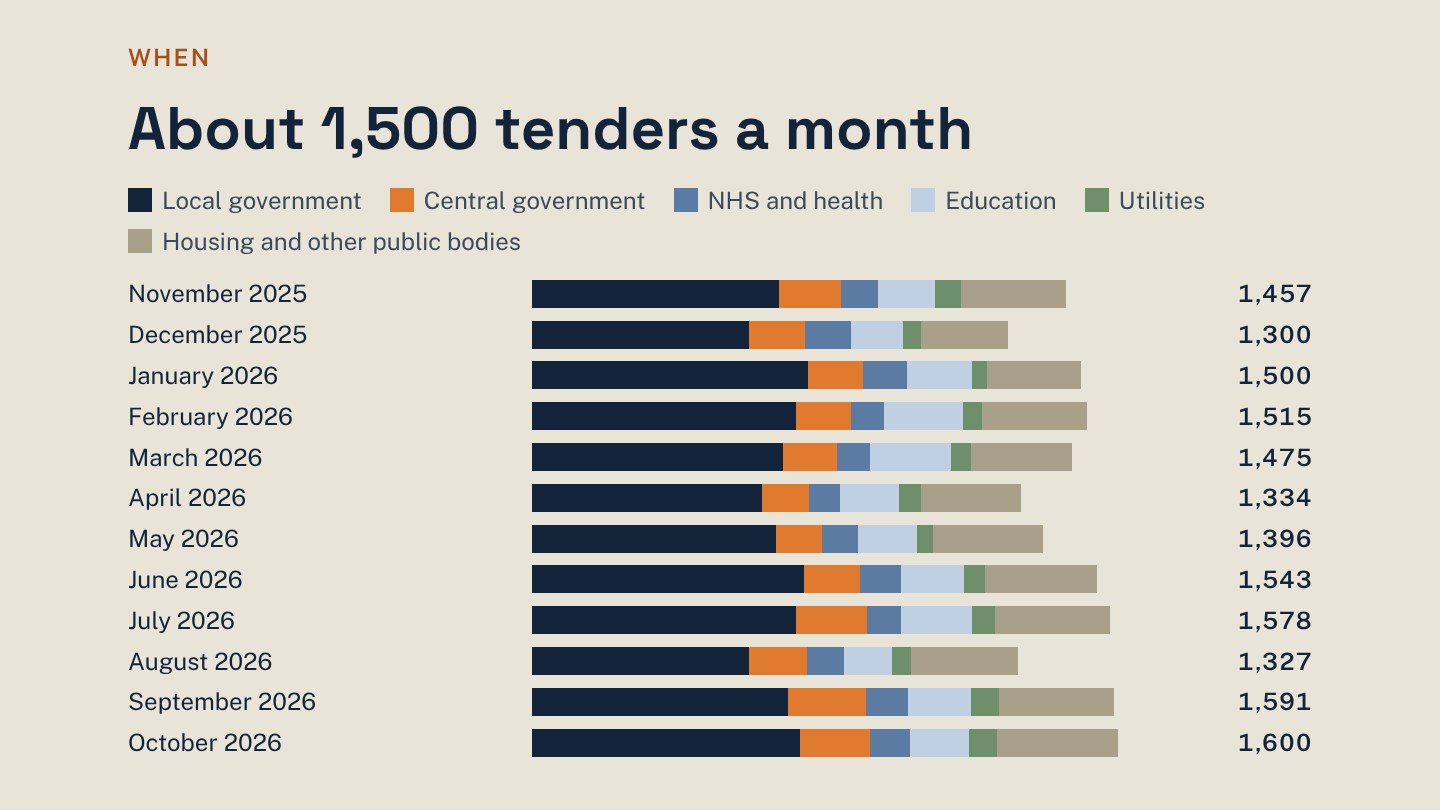
Public buyers advertised 17,616 tenders on Find a Tender between November 2025 and October 2026. That is about 340 new chances to bid every week, and nearly six in ten were worth under £1 million.
We went through every notice published in those twelve months to see what was on offer, who was buying it and how long suppliers had to respond. The numbers barely moved from one month to the next, so they give a fair picture of a normal year rather than a one-off. We will update them when the next twelve months are in.
If you are deciding whether public sector work is worth pursuing, or where to start looking, the charts below should help.
How many tenders, and when
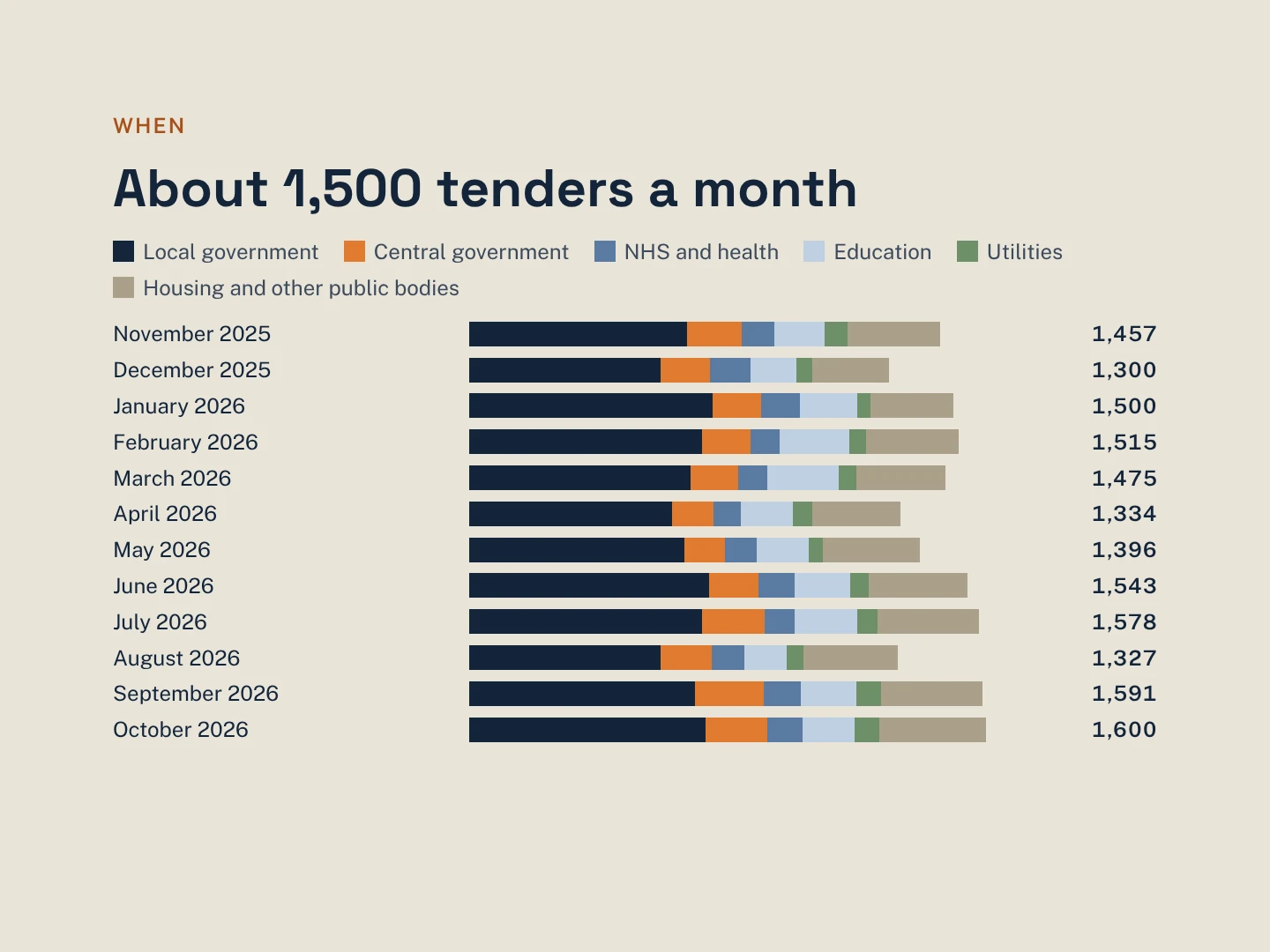
Buyers published between 1,300 and 1,600 tenders every month. December was the quietest, at 1,300, and October the busiest, at 1,600. No month went quiet, so there is no off-season to wait out.
Local government published almost half of each month's tenders. The rest came steadily from central government, the NHS, education, utilities and other public bodies.
How big the contracts are
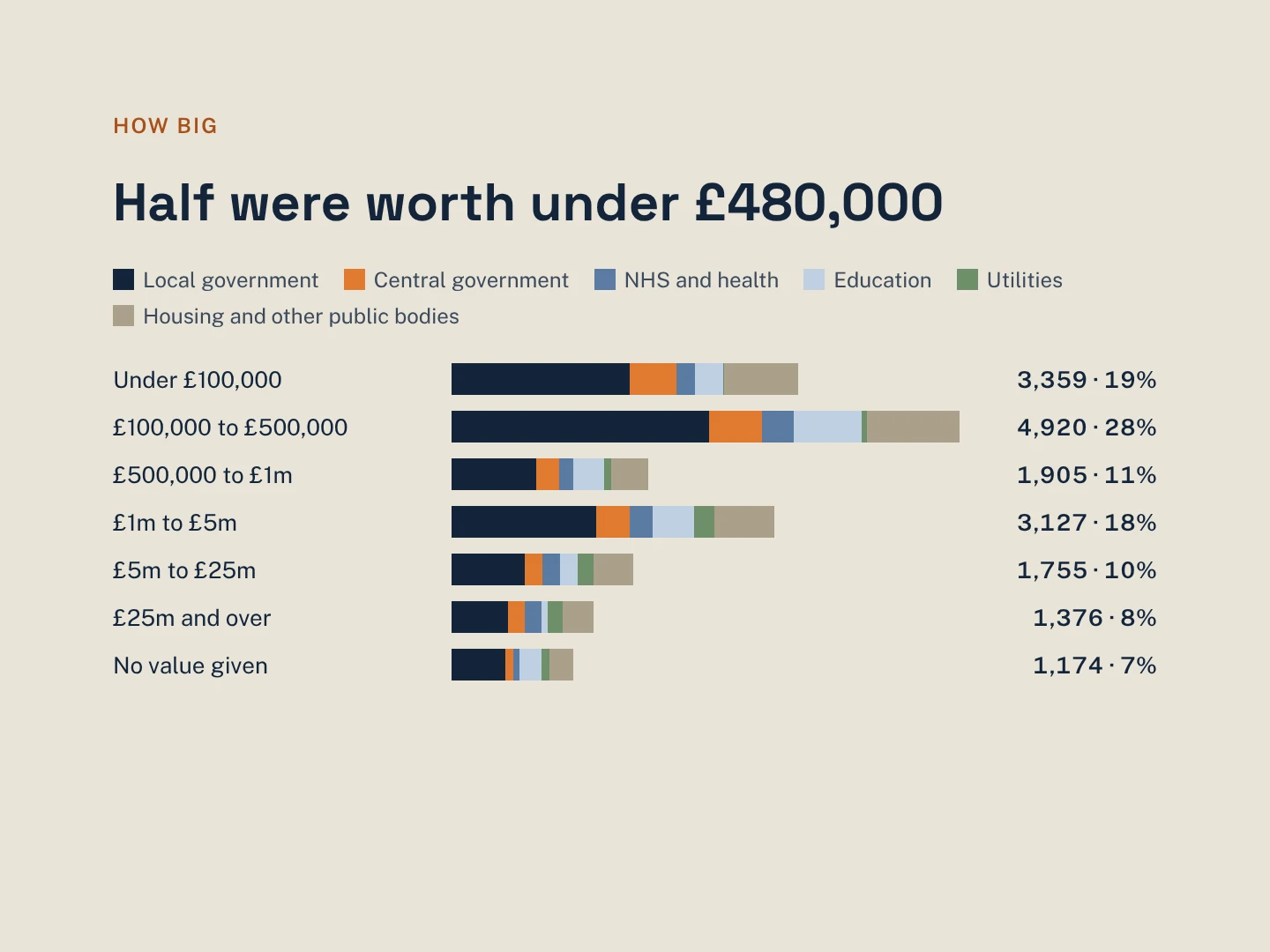
Half the tenders were worth under £480,000, and nearly six in ten were under £1 million. One in five was under £100,000. These are the buyer's estimates for the whole contract, which often runs for several years, so the value per year can be much lower.
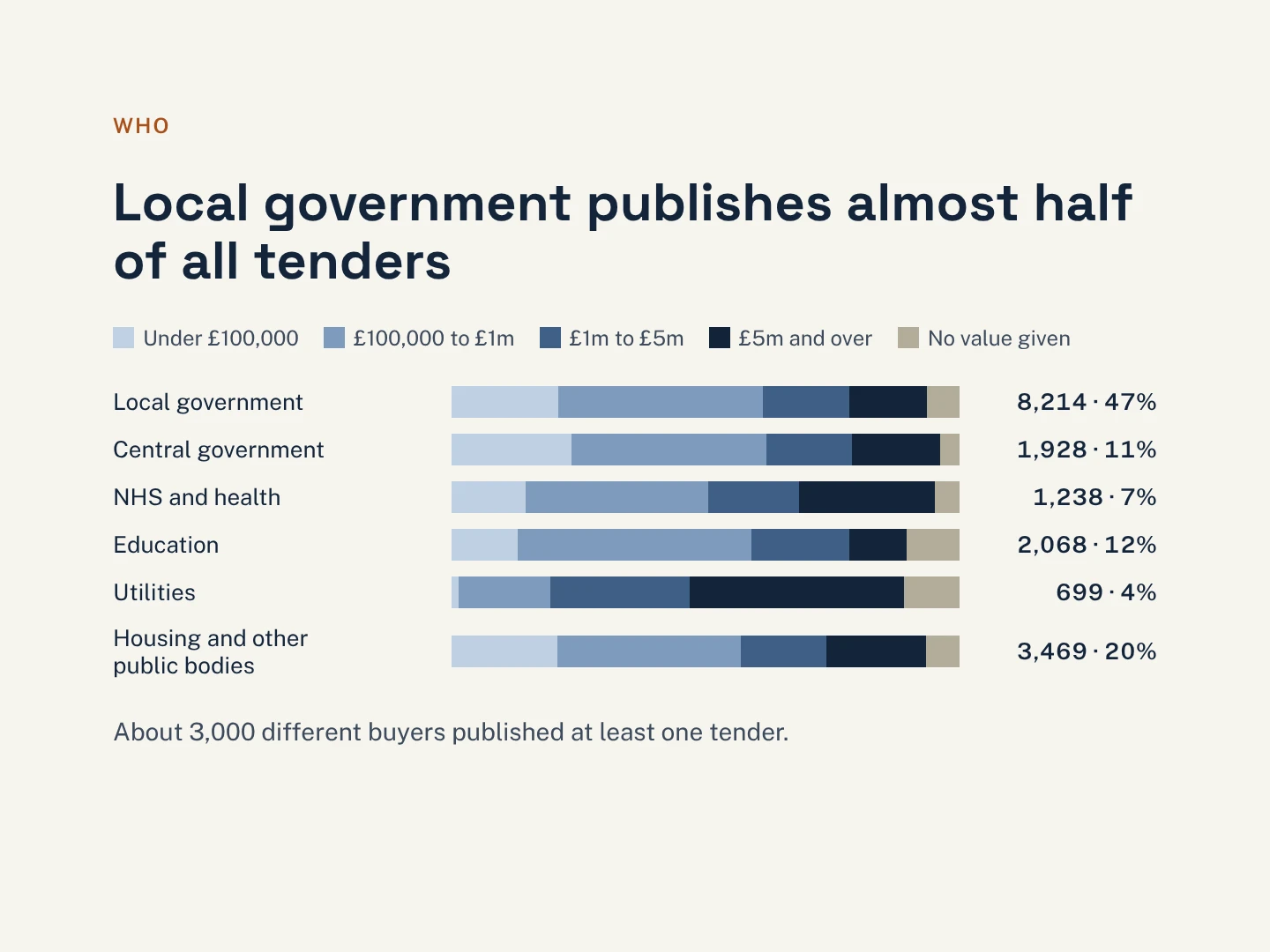
At the top end, 8% were worth £25 million or more. Local government placed half of the tenders under £100,000, while most utility tenders were worth over £1 million.
What is being bought
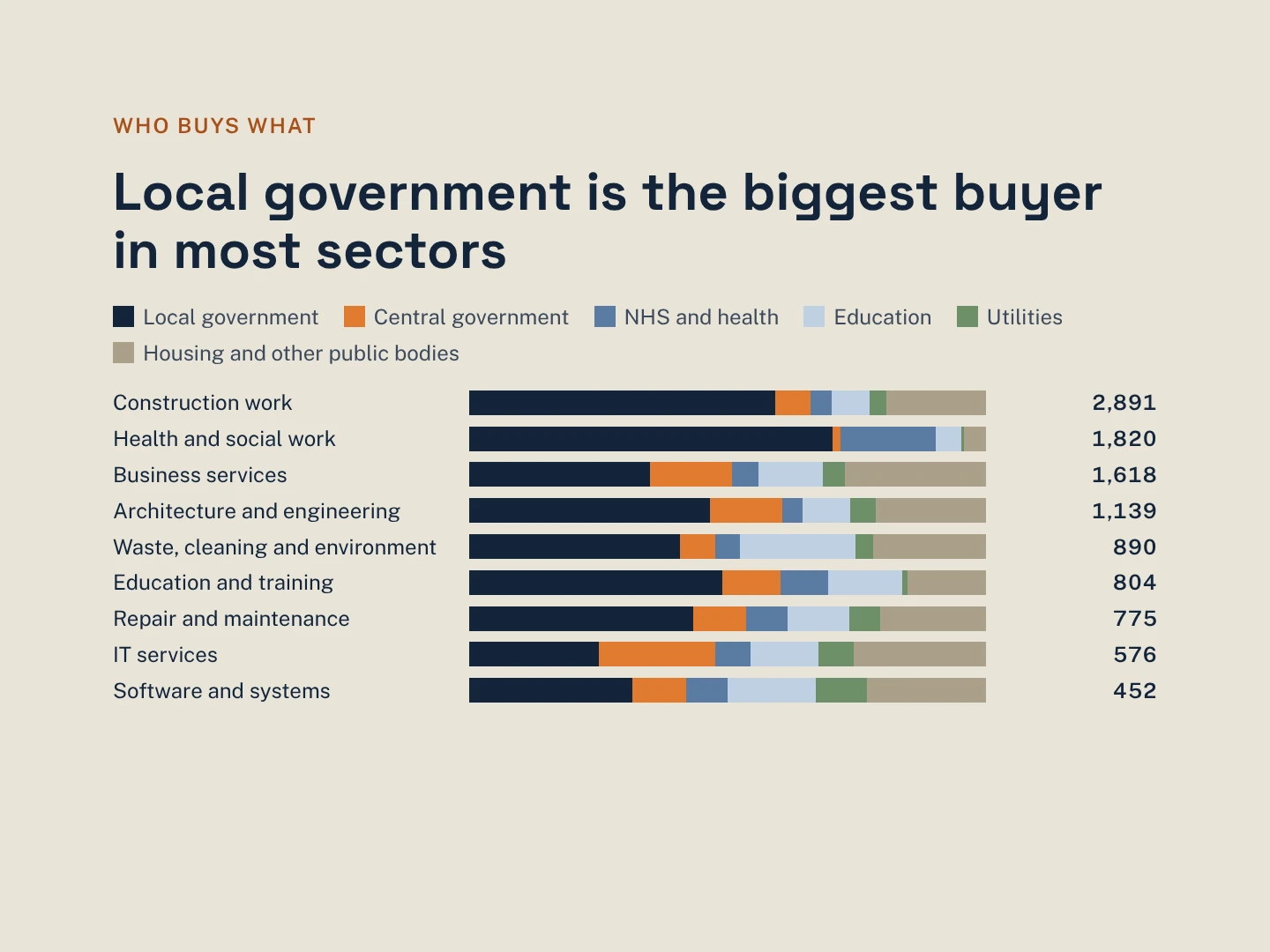
Construction was the largest sector, with 2,891 tenders. Health and social work came next with 1,820, then business services with 1,618, a group that covers legal, marketing, consulting, recruitment and security work. Health and social work had the most large contracts, with more than a quarter worth £5 million or more.
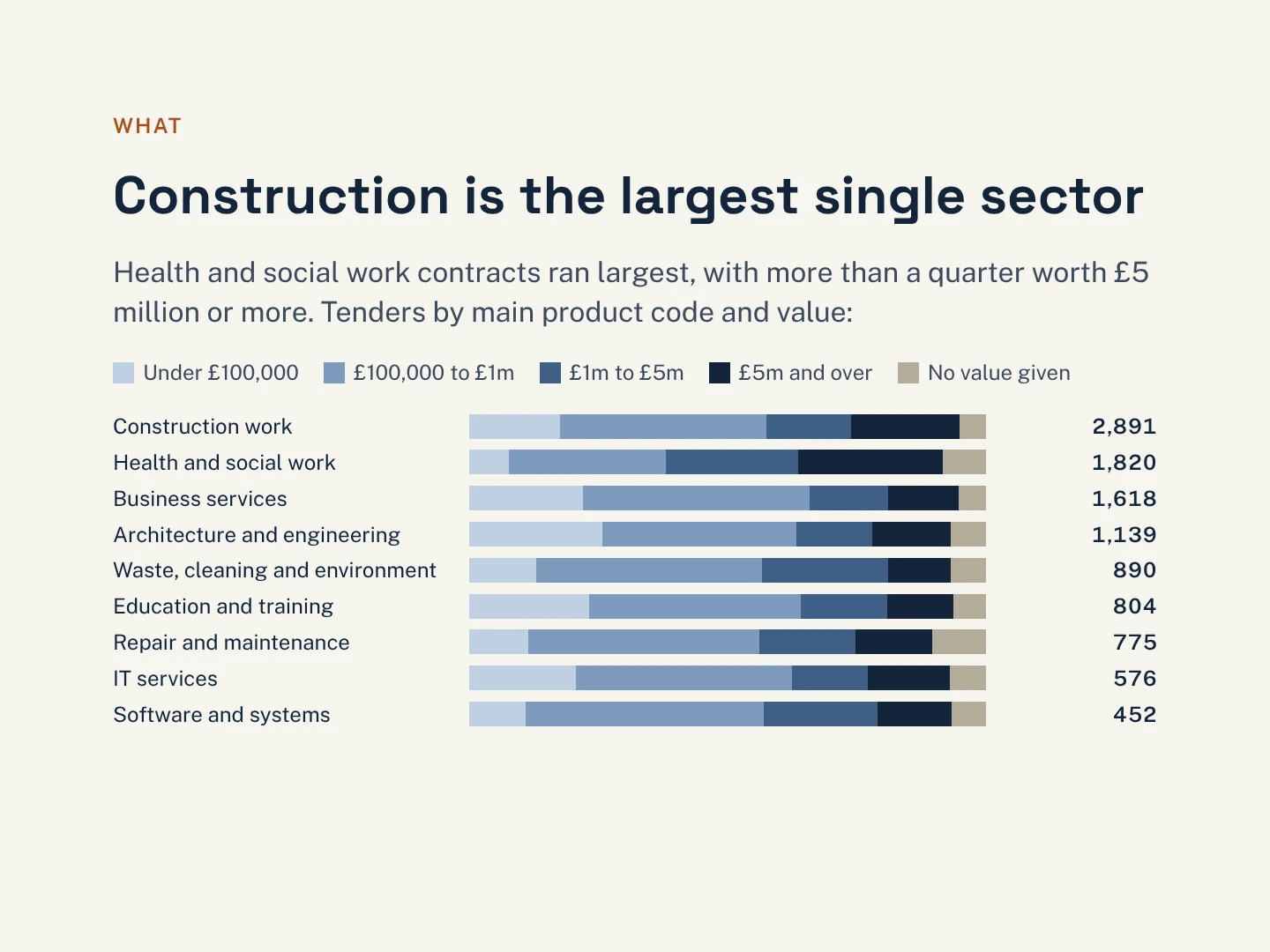
Local government was the biggest buyer in most sectors, and placed 70% of health and social work tenders. IT services was the exception, spread almost evenly across local government, central government and other public bodies.
Who buys, and where
Local government published almost half of all tenders. Housing and other public bodies (20%), education (12%) and central government (11%) made up most of the rest. About 3,000 different buyers published at least one tender.
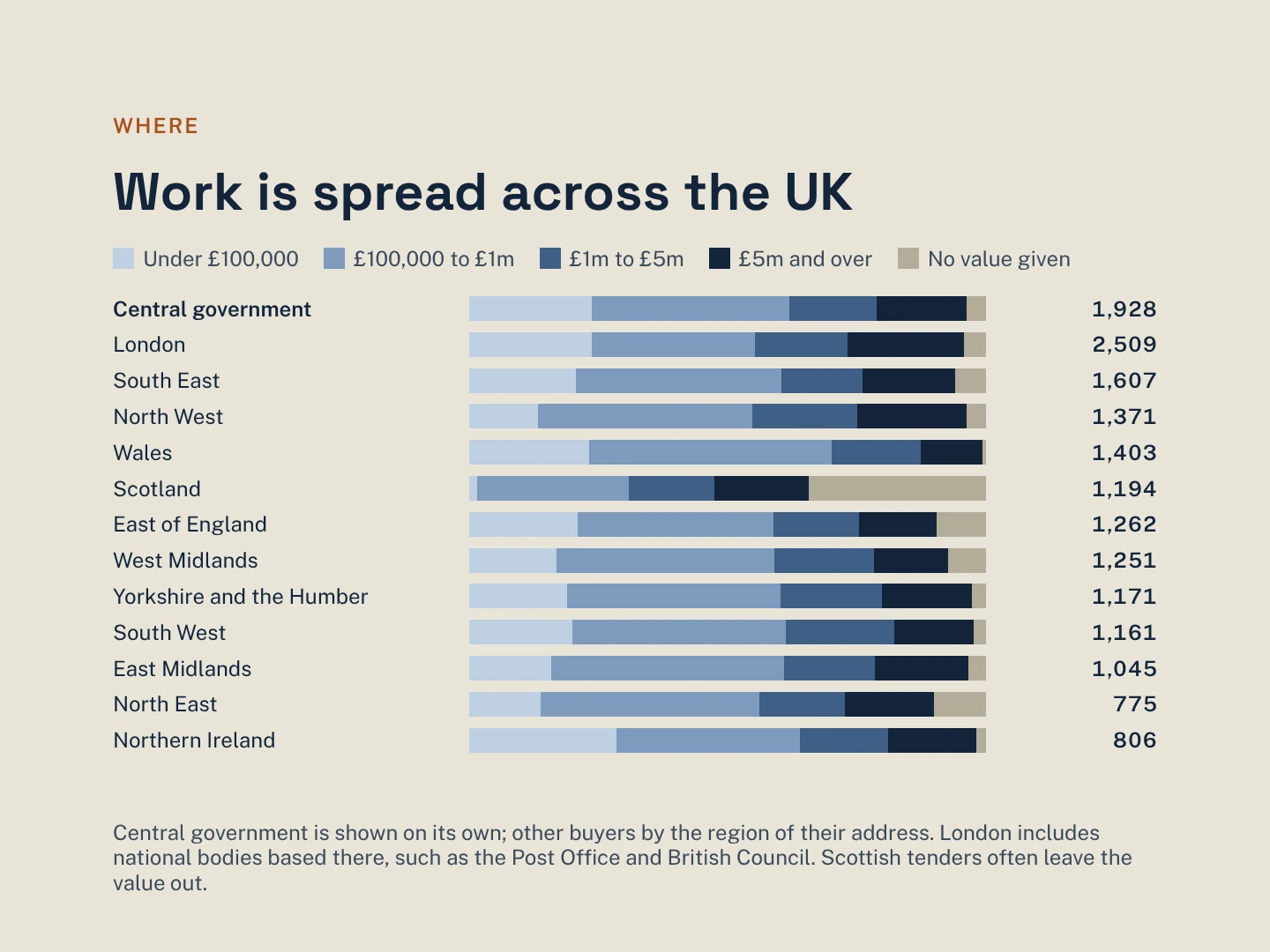
Every nation and region had a steady flow of work. London had the most, partly because some national bodies are based there. The North East and Northern Ireland had the fewest, and still had around 800 tenders each. Wales had the highest share of smaller contracts, with seven in ten under £1 million.
Getting in early, and the time you get to respond
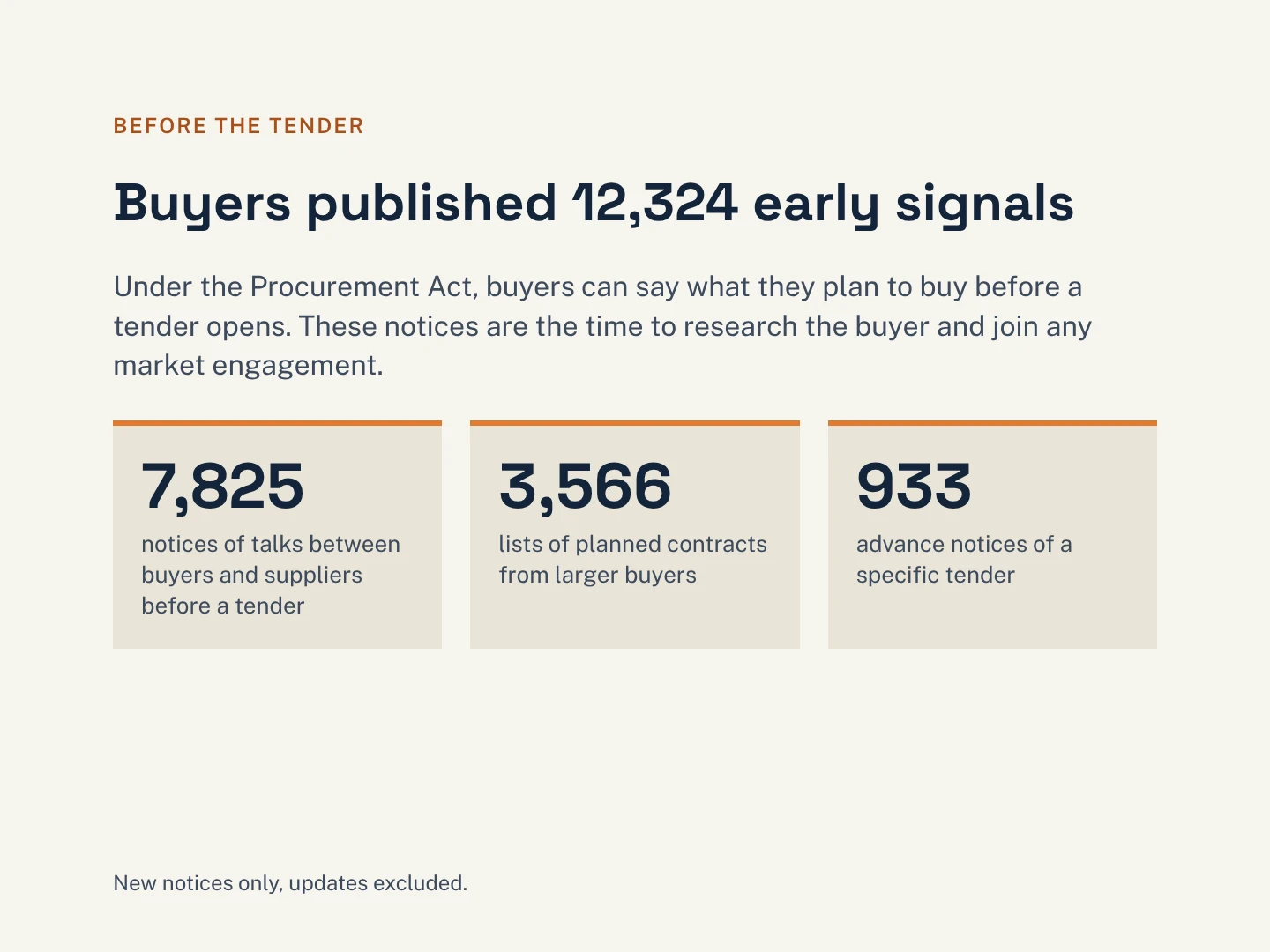
Buyers also published 12,324 early notices. Most recorded talks with suppliers before a tender, and the rest were lists of planned contracts from larger buyers or advance notice of a specific tender. They are a good time to research a buyer and get to know them.
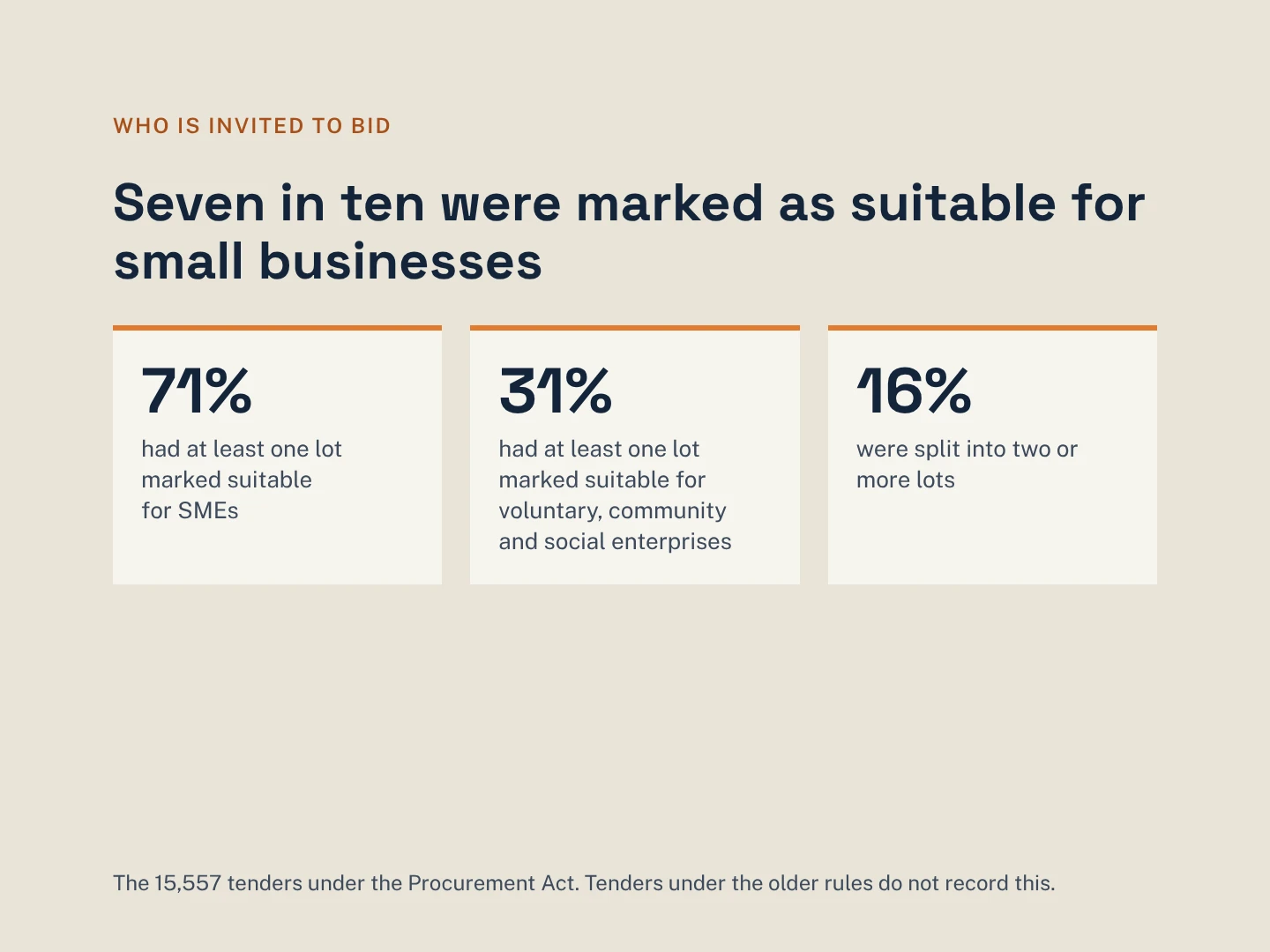
Of the tenders under the Procurement Act, seven in ten had at least one lot marked as suitable for small businesses.
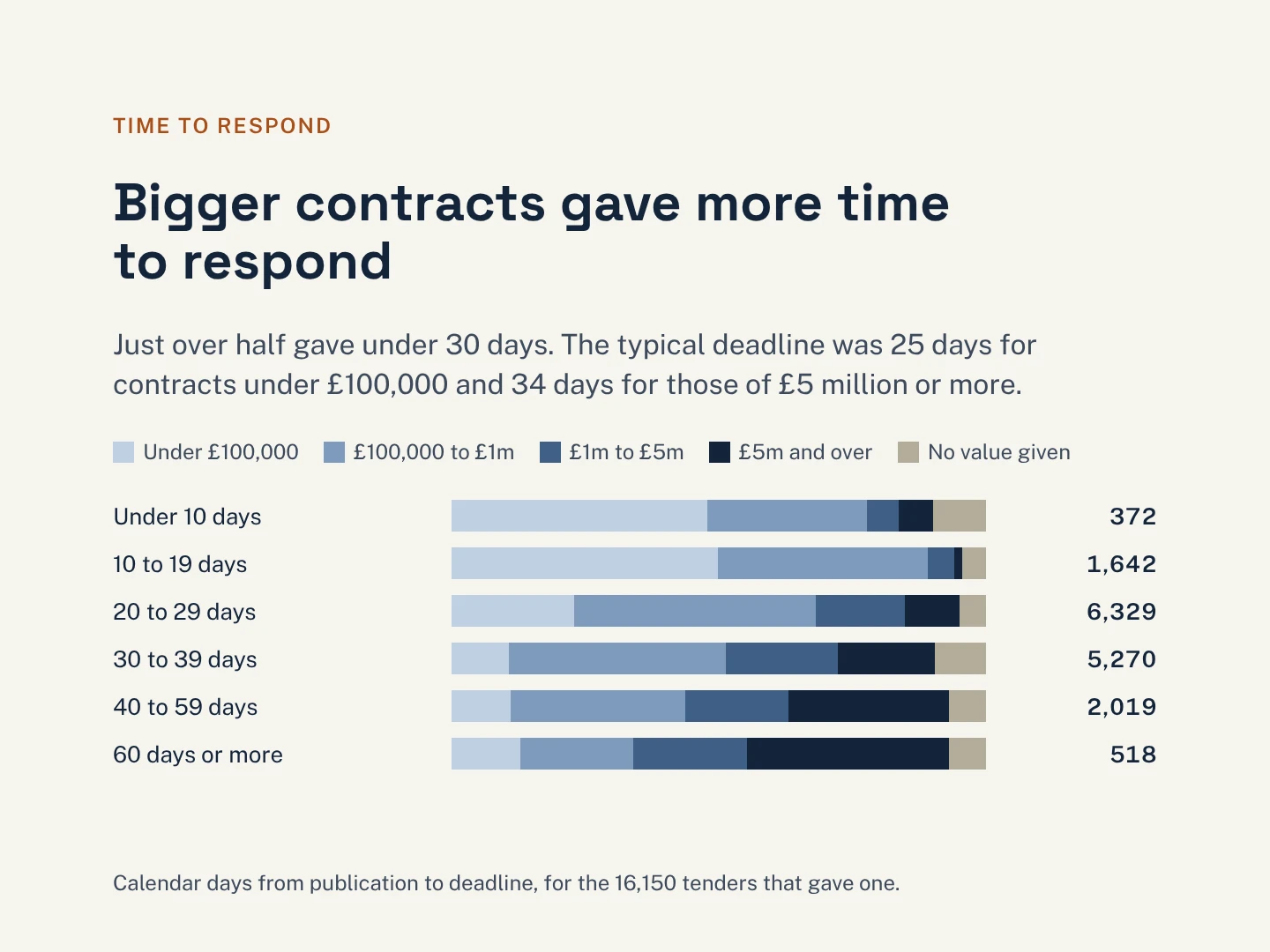
Once a tender is out, time is short. Just over half gave less than 30 days to respond. Bigger contracts were given longer, with a typical deadline of 25 days for contracts under £100,000 and 34 days for those of £5 million or more.
Where to look first
There is work in every sector and every part of the UK, and much of it is at a size smaller firms can take on. The harder question is where to put your time.
- Choose early. At about 340 tenders a week, the first job is finding the few that fit and saying no early to the rest.
- Start at the planning notice. Early notices give you time to talk to the buyer before the tender is written.
- Have your evidence ready. With most deadlines under 30 days, case studies, policies and CVs need to exist before a tender opens.
BidMate finds the Find a Tender and Contracts Finder opportunities that fit your organisation, then takes you through the bid, from tender analysis and research to drafting and quality checks. Start a free trial
If you would like help deciding which tenders to go for, or someone to work with your team on a bid, get in touch. Get in touch
How we counted
The Cabinet Office publishes every Find a Tender notice as a free daily download on data.gov.uk. We went through all 119,431 notices published from 1 November 2025 to 31 October 2026 and picked out the 17,616 that invited suppliers to bid. Of those, 15,557 were under the Procurement Act and 2,059 under the older rules, mostly from Scottish buyers. The other notices recorded contracts awarded, early planning, updates and cancellations.
- Values are the buyer's own estimate, including VAT for Procurement Act tenders.
- Sectors use the main product code the buyer chose. Regions use the buyer's address, with central government shown on its own.
- Buyers choose their own category on a notice, and do so inconsistently, so we grouped them by name. A small number may be misplaced.
- Suitability for small businesses is only recorded on Procurement Act notices.
- Our count for January to September 2026 (11,716 Procurement Act tenders) is within 0.3% of an independent count by TRINTA (11,680).
- Contracts Finder now only lists procurements started under the old rules, so it is not included.
Sources: UK Public Procurement Notices, data.gov.uk · TRINTA, UK government tenders.
FAQ
How many public sector tenders are published in the UK each year?
Between November 2025 and October 2026, public buyers advertised 17,616 tenders on Find a Tender — about 1,500 a month, or 340 a week.
How big are most UK public sector contracts?
Half were worth under £480,000 and nearly six in ten under £1 million. One in five was under £100,000. These are estimates for the whole contract, which often runs for several years.
How long do you get to respond to a UK tender?
Just over half gave less than 30 days. The typical deadline was 25 days for contracts under £100,000 and 34 days for those of £5 million or more.